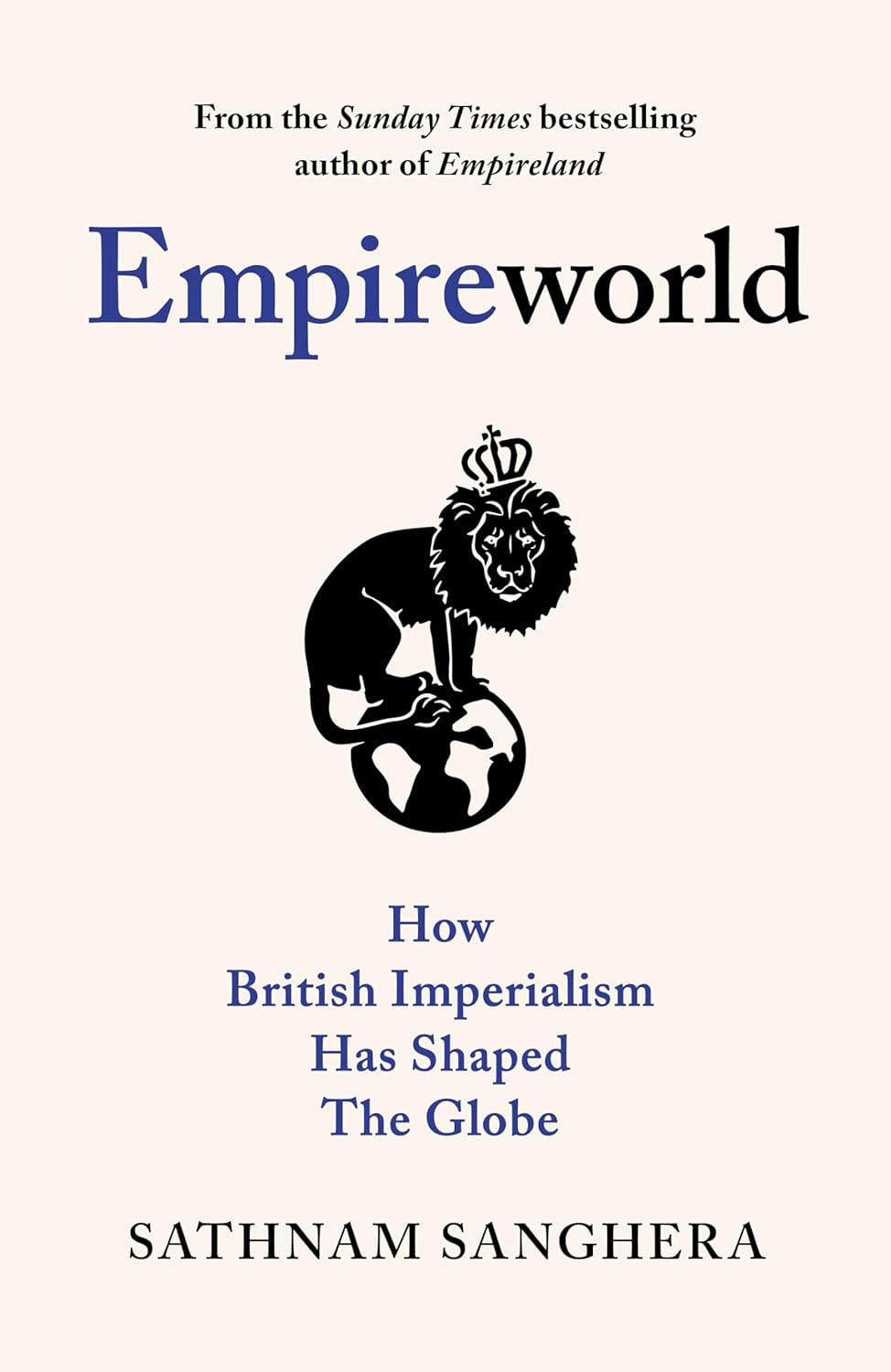
Two years ago, I came across Empireland, and it completely changed my perspective on history. Growing up, history ranked low on my list of favorite subjects – I struggled to connect with the weighty, distant topics. But as I’ve gotten older, I’ve found myself wanting to educate myself and better understand the past. While browsing Waterstones, I spotted Empireland, and a quick skim suggested it could be the perfect starting point.
I need to reread Empireland – I’ll do a proper write-up then – but one thing struck me immediately as I started: the glaring absence of this crucial history from my education. I spent almost my entire school life in Scotland, yet I can’t recall a single detailed lesson about the British Empire. Perhaps I’m misremembering, but if it had been covered, I’m sure I would have wanted to dive in.
All this to say, Sathnam Sanghera and Empireland sparked my desire to understand the history of the British Empire and its impact on the world, with a personal focus on India. Since then, I’ve made an effort to learn more – various books and podcasts have helped me along the way. So when I saw a post about a talk where Sathnam would be exploring British imperialism’s global legacy, I knew I had to read his latest book, Empireworld.
As the name suggests, Empireworld takes a broader view of the empire’s legacy. The book opens with a focus on Barbados, highlighting how modern life on the island often omits or downplays the role of slavery in shaping it. In some cases, this is due to a lack of open discussion and education; in others, it appears to be a deliberate avoidance of the topic. Another key takeaway from this section was the environmental impact of British rule. Sugarcane cultivation made Barbados more valuable to the empire than all its other colonies combined, but this monoculture devastated the island’s original vegetation. Even after abolition, the country remained economically dependent on sugar, making it vulnerable to the industry’s decline. Given this history, the demand for reparations is understandable – imperialism didn’t just shape Barbados; it severely inhibited its growth.
Indentured labor is another topic I admit to knowing little about, so the book’s exploration of its origins in Mauritius particularly interested me. Recruited through contracts known as “girmits,” labourers were subjected to extreme exploitation in what became “one of the greatest migrations in human history.” The very fact that their treatment draws comparisons to slavery speaks volumes. Once again, the effects of this system were long-lasting, shaping the generations that followed and the colonies where they worked.
Sathnam also delves into a range of other topics, from the roots of British charities and INGOs, many of which grew out of imperialism’s so-called ‘civilizing mission,’ to the lasting consequences of imposing British legal systems on colonised nations.
But beyond the individual stories, my biggest takeaway from Empireworld is its overarching theme – the British Empire was a web of contradictions, which brought both progress and devastation (often simultaneously) across the globe. The empire inspired anti-racist movements, yet it was also a major propagator of racist ideologies. It spread democracy while also sowing discord and chaos. As Sathnam concludes, a simplistic “good versus bad” evaluation is not productive.
To move forward, we must separate moral judgment from historical reality – not to excuse or dismiss, but to understand. It’s our responsibility to engage in genuine dialogue – to acknowledge the past while working toward a better future. Empireland first sparked this curiosity in me, and Empireworld has only deepened my determination to keep learning and contributing to the conversation.
