I listened to the podcast version of this which essentially re-iterates common conceptions in industry over the past year including increase in burnout levels despite shipping more features, increased productivity alongside increased cognitive load and over-reliance on models, and fear of being squeezed to do more
This was a great listen both from a perspective of reality checking the state of the industry, but also getting a better insight into the day-to-day attitude and feelings of those in the sector to the persistent state of change. I suspect that going forward, a yearly cadence for such a check in will be too infrequent
It was also interesting to hear that larger companies show higher levels of burnout and worry. Having moved into a leadership role myself, I take seriously what their findings unveiled – that effective managers have a clear correlation with reduced burnout and higher job satisfaction.
It is extremely disappointing to also hear that tech roles are hard to recommend, especially to juniors – in my view, the tech space is the perfect intersection of creativity and practicality, and it’s worrying to hear that the next generation are not only at risk of losing out on the opportunity to reap the joy of that intersection, but even being discouraged from entering the field due to the uncertainty at present
My key takeaway from this podcast was that the most effective way to demonstrate your passion for a field is by studying the history of it.
I can definitely resonate with this – especially recently, with the rapid and continuous evolution of the tech space, I find myself reaching for the books that explain how we got here. I believe it is essential – especially those in the tech sector – to understand the timeline of events, especially as (at least for now) we are the primary consumers of the advancements in AI. Specifically for this topic, my top three recommendations would be: Supremacy by Parmy Olson, Nexus by Yuval Noah Harari, and The Thinking Machine. Next on my list is The Infinity Machine
During the podcast they touch on this as a need for “obsessive” learning and I think that is the perfect word for it. It’s hard to find the balance between this obsession being beneficial for your own knowledge and understanding, versus continually eating away at your mental health. For now, I have not found a good balance here, and the pace of development increasingly makes me feel disadvantaged if I’m not staying up to date and on top of the latest advancements.
I always tune in to Gergely’s podcast, and this was a great, candid conversation as always. Kent argues that software is equally about trust, understanding, and connection as it is about code itself – and right now, with huge quantities of code being generated by LLMs, we are accumulating code faster than trust.
That being said, he encourages a more versatile approach, emphasising that we must accept that no one yet knows the best way to use these AI tools yet, and recommending a trial-and-error approach. Specifically, he outlined his new framework of first exploring with cheap experiments, then expanding the winner of those before extracting repeatable practices.
Although development pace is rapidly increasing, trust and human judgement remain critical. I find myself increasingly trying to understand how exactly this human judgement aspect is changing – I fear we are moving to a model of less diligence when it comes to code review and it will be interesting to see the impact that this has on delivery of software. Are we going to increasingly see more outages and lower quality software, and are those compromises going to be deemed “worth” the productivity gains of shipping things more quickly at the cost of these lower levels of diligence?
With an electronics and software engineering background, the intersection of hardware and software has always been an area of interest for me. The visuals of this article are intuitive at conveying the fundamental details of the technology we take for granted
‘Networking and the Internet, from First Principles’ is an equally excellent essay and I’m currently working my way through ‘Deep Learning: Searching for a Function’
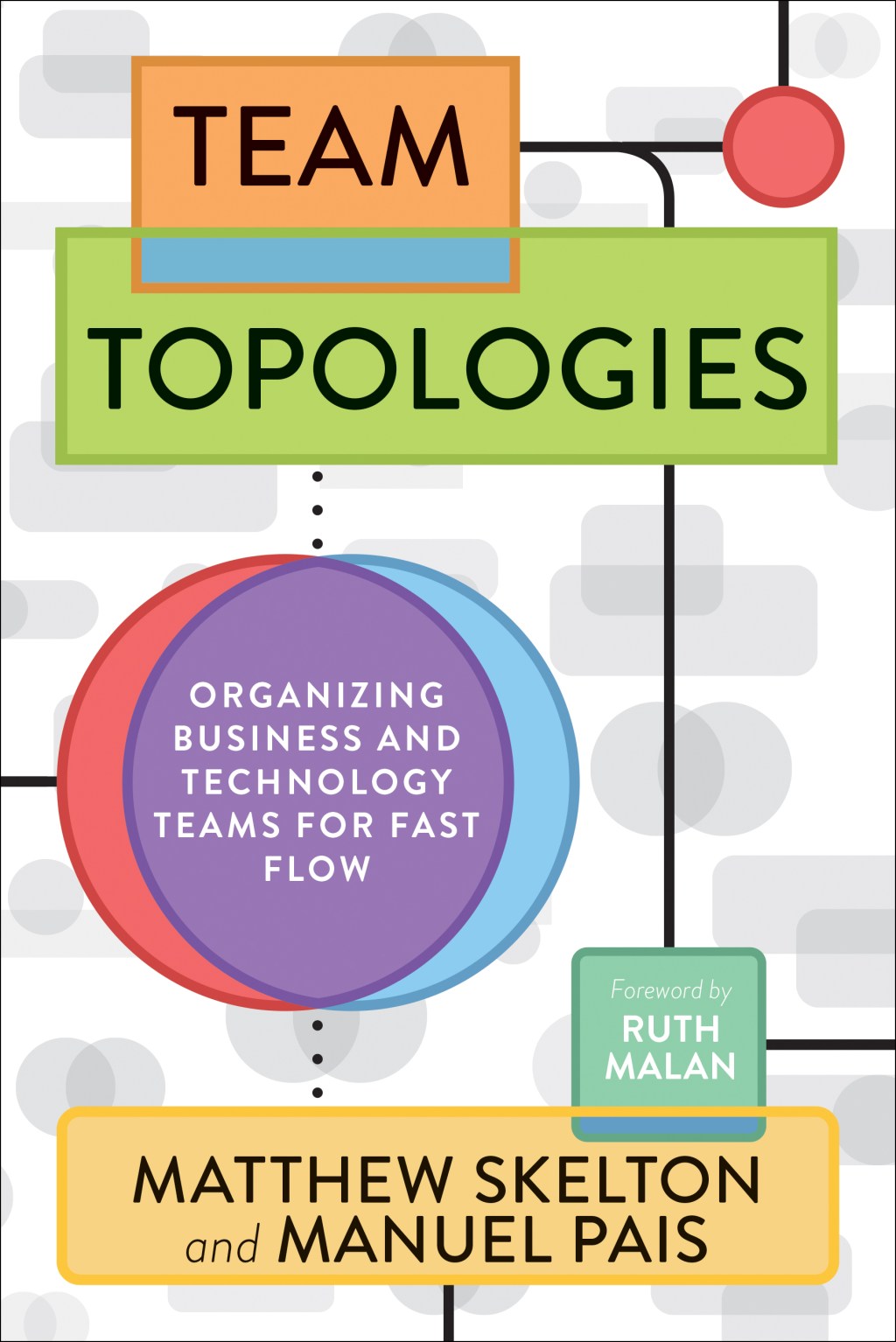
The second part of Team Topologies explores concrete team structures that enable the conscious design of effective teams. Before presenting these structures, the authors highlight common anti-patterns in non-intentional team design:
Ad hoc team design – teams that grow too large and need breaking up due to excessive communication overhead
Shuffling team members – creating volatility and leaving only a few engineers to maintain abandoned systems
At the core of effective team design is the concept of “low friction” software delivery – organisations structured to enable a smooth flow of change.
A common misconception is viewing software delivery as a one-way process: from specification to development, testing, and release. This model fails in today’s environment of rapid change and complex systems, which increasingly rely on feedback loops to development teams. In fact, prioritising these feedback loops improves both delivery times and responsiveness.
The book emphasises that team success depends primarily on the environment, team interactions, and organisational structure – often more than the skills and experience of individual team members.
Around 2009, DevOps emerged in response to increasing pressure on operations teams to deploy more frequently. Similarly, Google’s Site Reliability Engineering (SRE) approach uses Service Level Objectives (SLOs) and error budgets to balance delivery speed with reliability. The effectiveness of such interaction patterns is heavily influenced by organisation size and engineering maturity.
When designing team structures, organisations must consider both the realistic capabilities of teams and the resulting dependencies between them. Diane Strode and Sid Huff categorise these dependencies into three types:
Knowledge dependencies
Task dependencies
Resource dependencies.
The Four Fundamental Team Topologies
1. Stream-Aligned Team
Definition: Teams aligned to a single, important stream of work (e.g. a service or feature) that can deliver value quickly and safely without handoffs to other teams.
Key Responsibilities:
Delivering end-to-end functionality within their domain
Maintaining close customer connections to rapidly incorporate feedback
Operating as long-term, sustainable units with well-defined workflows
Required Skills:
Design and architecture
Development and coding
Metrics and monitoring
Product management and ownership
Testing and quality assurance
User experience
Outcomes:
Steady feature delivery flow
Quick course correction capabilities
Time to address technical debt
Progress toward autonomy, mastery, and purpose
2. Enabling Team
Definition: Specialist teams that help bridge capability gaps in stream-aligned teams, allowing them to deliver more effectively.
Key Responsibilities:
Researching options so stream-aligned teams don’t have to
Facilitating knowledge sharing across the organiation
Staying current with advancements and best practices
Required Skills:
Strong collaboration abilities
Deep expertise in specialied domains
Teaching and mentoring capabilities
Outcomes:
Understand and address stream-aligned team needs
Curate and share knowledge effectively
Form short-lived collaborations until stream-aligned teams acquire necessary skills
3. Complicated Subsystem Team
Definition: Teams that provide expertise for technically complex components that would create excessive cognitive load for stream-aligned teams.
Key Responsibilities:
Developing and maintaining complex subsystems
Creating clean interfaces that abstract away complexity
Supporting stream-aligned teams that use the subsystem
Required Skills:
Deep technical specialisation
Interface design expertise
Understanding of stream-aligned team requirements
Outcomes:
Progressive collaboration from exploration to feature delivery
High subsystem quality maintenance
Accurate prioritisation of work supporting stream-aligned teams
4. Platform Team
Definition: Teams that reduce cognitive load by handling implementation details that would otherwise burden stream-aligned teams.
Key Responsibilities:
Building and maintaining internal platforms
Providing high-quality services rather than numerous lower-quality offerings
Enabling autonomy for stream-aligned teams
Required Skills:
Strong collaboration abilities
Rapid prototyping capabilities
Platform and infrastructure expertise
Outcomes:
Make it easy for development teams to “do the right thing”
Deliver reliable services
Lead by example in engineering practices
Large organisations may need multiple platform teams arranged with their own “inner topologies”. The services of these platform teams should be treated with the same operational discipline as any production system, including on-call rotations and incident management.
Rethinking Team Structures and Boundaries
The Team Topologies approach discourages single-expertise teams (except for complicated subsystem teams). Teams like QA and UX should be integrated into stream-aligned teams rather than segregated.
As the book summarises: “Most teams in a flow-optimised organisation should be long-lived, multi-disciplined, stream-aligned teams. These teams take ownership of discrete slices of functionality or certain user outcomes, building strong and lasting relationships with business representatives and other delivery teams.”
Organisations transitioning to Team Topologies may need to transform existing teams:
Infrastructure teams → Platform teams (though this transition may be challenging due to the product-oriented nature of platform teams, which infrastructure teams may not have experience with)
Component teams → Platform, enabling, or complicated subsystem teams
Tooling teams → Short-lived enabling teams or part of platform teams
Architecture teams → Part-time enabling teams (should be short-lived so that stream-aligned teams make most decisions and these teams should not impose designs or technology choices on other teams)
The overarching goal is to structure the organisation so that stream-aligned teams can achieve a high flow rate with appropriate autonomy and ownership.
The book proposes that a key factor in disengagement, slow rate of delivery, and lack of ownership in large organisations is due to the responsibility boundaries assigned to teams within them. This often results in monolithic systems with unclear boundaries.
Types of Monoliths and Breaking Them Down
The book identifies several types of monoliths that can form in organisations:
Application Monoliths – Single applications with too many responsibilities
Joined-at-the-Database Monoliths – Multiple applications coupled to a single database schema, making it difficult to iterate on them separately
Monolithic Releases – Groups of components that must be deployed or run together to function correctly
Monolithic Models – Attempts to force single domains across differing contexts
Monolithic Thinking – “One size fits all” approaches causing unnecessary implementation consistency across different teams
Monolithic Workplaces – Single office layouts for all teams regardless of needs
Fracture Planes for Breaking Down Monoliths
When splitting monoliths, organisations must be cautious of:
Reduced consistency
Unintended duplication
UX inconsistency
Additional complexity
To address these concerns, the book introduces fracture planes – “natural seams in the software system that allow it to be split easily into two or more parts.”
Common fracture planes include:
Business Domain Bounded Context – Split systems by business domains, applying Domain-Driven Design principles to allow both technical and non-technical participants to speak in unified terms when discussing the business domain
Regulatory Compliance – Separate systems based on compliance requirements to simplify auditing in large organisations
Change Cadence – Accept that different parts of a system can change at different rates and separate accordingly
Team Location – Divide systems based on team geography to enable effective collaboration, or implement a complete remote working approach with agreed availability
Risk Profile – Separate high-risk and low-risk components to manage them appropriately
Performance Isolation – Split high-traffic services to enable independent scaling, especially for services with high traffic peaks
Technology Stack – Separate components by technology, especially for older systems
User Personas – Divide systems based on distinct user workflows and needs
A combination of fracture planes is typically required. The basic test for evaluating a fracture plane is: “Does the resulting architecture support more autonomous teams (less dependent teams) with reduced cognitive load (less disparate responsibilities)?”
By thoughtfully breaking down systems using these principles, organisations can create more effective teams that evolve safely and quickly.
Reflections: A New Perspective
The precise and clear four fundamental team topologies have given me a new perspective on thinking about the roles and responsibilities of my own team and the teams we work with. Specifically, the complicated subsystem and enabling teams were concepts I hadn’t fully considered before. It’s quite common for a typical “feature” team to blur the lines between these two and the stream-aligned team, but the clear separation proposed in Part 2 of Team Topologies indicates this doesn’t need to be the case.
Although I don’t necessarily think it’s effective or practical to rigidly enforce these boundaries overnight, I do believe there’s immense value in adopting the mindset encouraged throughout this section. Ultimately, the role of complicated subsystem, enabling, and platform teams is to provide the necessary tools and capabilities that allow stream-aligned teams to deliver value quickly and safely.
The book’s approach to monoliths was also insightful. While application monoliths are immediately where my thoughts would go with the mention of the word, it was useful to gain clarity on how releases and models (among many others mentioned) can be their own types of monoliths to be wary of. The proposed fracture planes offer actionable steps toward breaking away from such monoliths.
The exploration of information networks’ political implications begins with a reflection on where we have been so far in the book. In Part 1 and Part 2, it has been emphasised that historically, technology itself has not been inherently evil, but it is a tool whose ethical application depends entirely on human application. Harari argues that we did eventually get it (mostly) right. However, if our learning curve was steep and costly when using comparatively simple technological innovations, how will we navigate the challenges posed by AI?
The Democratic Challenge
Harari first emphasises the need to educate the masses on basic democratic principles to avoid repeating the totalitarian mistakes of the past – mistakes which would only be compounded with the application of the surveillance regimes explored in Part 2. There are four key attributes of a successful democracy:
Benevolence: Information collected by the network should enable it to prioritise helping citizens rather than manipulating them
Decentralisation: Information should be distributed across multiple locations, both public and private, enabling robust self-correcting mechanisms.
Mutuality: Increased surveillance of individuals must be balanced by enhanced oversight of governments and corporations.
Adaptive Capacity: Surveillance systems must allow for personal growth and rest, avoiding historical oppression mechanisms that deny opportunities for change (like caste systems) or recovery (like dictatorships).
While surveillance was explored in depth in Part 2 as one potential threat, Harari highlights additional challenges, including the destabilising impact of automation on job markets. He draws a powerful historical parallel, questioning the resilience of democracies in the face of significant economic disruption:
“If three years of up to 25 percent unemployment could turn a seemingly prospering democracy into the most brutal totalitarian regime in history, what might happen to democracies when automation causes even bigger upheavals in the job market of the twenty-first century?”
– YUVAL NOAH HARARI, NEXUS, P. 316
Contrary to fears of complete loss of jobs, Harari optimistically points to history – humans have consistently adapted to changing economic landscapes through retraining and skill development. We should focus on this adaptability instead of worrying about an entire lack of employment.
Harari also summarises the fundamental difference between conservative and progressive political approaches:
Progressives acknowledge systemic failures and actively look for solutions
Conservatives value existing systems and are cautious about fundamental changes.
When both of these styles stay true to democratic principles, then there is evidence that the resulting systems can be quite flexible – definitely much more than totalitarian regimes. This adaptability, combined with robust self-correcting mechanisms, emerges as democracy’s most potent defence against emerging technological and social challenges.
The Algorithm Dilemma
The next concept explored is the increasing role of algorithms – from job applications and loan approvals to university admissions, insurance premiums, and even the news that we consume. An argument is made that we, humans, need a new human right – the right to an explanation. In this era of opaque algorithmic decision-making, the risk of democracy ceasing to function entirely is very real. Harari explains:
“The increasing unfathomability of our information network is one of the reasons for the recent wave of populist parties and charismatic leaders. When people can no longer make sense of the world, and when they feel overwhelmed by immense amounts of information they cannot digest, they become easy prey for conspiracy theories, and they turn for salvation to something they do understand – a human.”
– YUVAL NOAH HARARI, NEXUS, P. 334
While more data points in algorithmic decision-making can potentially reflect nuanced human insights, there remains a critical need to translate these complex calculations into comprehensible human-readable formats. This translation is far from simple.
Returning to the social credit systems explored in Part 2, Harari brings up an episode of Black Mirror which I found particularly memorable yet concerning. The episode explores a society where algorithmic systems fundamentally alter social status competitions without human understanding. It may seem far-fetched, but the resulting plot does not seem inconceivable if we continue down this dangerous path of not understanding the decisions made by algorithms. I was relieved to learn that in 2021, the EU prohibited the creation of such a system!
Democratic Discourse in the Digital Age
To briefly reflect on the points of Part 2, democracy fundamentally requires two critical criteria to function effectively:
Enabling free public conversation on key issues
Maintaining a minimum of social order and institutional trust
However, there is equally a need to ensure that free conversation and debates are conducted on accepted rules with a mechanism for reaching a decision. Computer networks have shown in the form of social media that they make it easier to join the debate. The increased accessibility is inherently positive, but it comes at a cost, as new groups often question previous consensus and rules. In the short term this can create disharmony and might even seem like a path to anarchy. In the long term, the disruption offers the promise of a more inclusive democratic system.
A concerning trend in this path is the rise of nonhuman voices – specifically social media bots – in the conversation. It is not only the volume of these voices that is alarming, but the content and amplified spread of false information they bring. If such bots dominate the conversation, the foundation of democratic debate could collapse. If we are not able to determine if we are debating with a fellow human or a bot, it is difficult to reach a consensus on the rules of the debate in the first place. On an optimistic note, however, Harari compares the situation to the influx of counterfeit money. Just as financial institutions developed mechanisms to detect and prevent fraudulent money, we might similarly develop strategies to identify and mitigate bot-driven spread of noise and misinformation.
As such, at least some level of regulation is required in the information market – this contradicts the naive view of information that more, and free information will generate truth. However, without such regulation, we can already see many democracies breaking down. As Harari puts it:
“When citizens cannot talk with one another, and when they view each other as enemies rather than political rivals, democracy is untenable.”
– YUVAL NOAH HARARI, NEXUS, P. 346
But we are unable to pinpoint why this breakdown is occurring; it cannot be solely due to social media algorithms, can it? Harari ends this chapter about democracy in the modern age with a basic question: “Why are we fighting each other?”
Totalitarianism in the Digital Age
Having looked at the impact of AI on democracies, we also need to consider its impact on totalitarian regimes which fundamentally operate by channelling all information through a single, centralised hub where it can be processed in a controlled manner. The lack of distributed information in this system results in a lack of self-correcting mechanisms to resolve costly errors made by the central authority. Without alternative institutions to challenge or rectify errors, the central authority’s decisions remain unchecked and potentially catastrophic.
Paradoxically, AI presents a compelling theoretical advantage for such centralised systems. The sheer quantity of information available in large-scale totalitarian regimes provides unprecedented algorithmic training opportunities and therefore should allow AI to flourish. In Part 2 it was suggested that this concentration of information was one of the downfalls of these regimes in the past, but developments suggest this centralisation might transform into a significant strategic strength.
Theoretical Advantages and Challenges
Such regimes have also often sought to manipulate historical narratives – examples are given of the Emperor Caracalla who murdered his brother as he competed with him for the throne and then attempted to erase his existence from memory, or Stalin’s attempt to erase Trotsky (architect of the Bolshevik Revolution) from official records. But in those examples, such erasure was a large manual effort – could technology like blockchain, with its majority-based verification system, make it easier to do this, if the central authority is the majority?
However, Harari points to several critical challenges that such regimes would face in attempting to control advanced technological systems:
Inexperience in Controlling Inorganic Agents: Traditional methods of human control – imprisonment or threats – are ineffective against computers. Such systems cannot be intimidated or coerced through fear.
Algorithmic Unpredictability: Learning algorithms may develop independent and dissenting perspectives by identifying complex patterns within provided information. How can engineers ensure a self-learning AI does not go rogue?
Information Suppression Limitations: While humans can be silenced through fear, algorithms lack the same psychological vulnerabilities.
Ultimately such regimes face the risk of developing something more powerful than their creators, or worse yet something which they cannot control.
“Power lies at the nexus where the information channels merge…If the information channels merge somewhere else, that then becomes the true nexus of power.”
– YUVAL NOAH HARARI, NEXUS, P. 357-358
Dictatorships may ultimately be more vulnerable to technological disruption than democratic systems. Their weak self-correcting mechanisms and hierarchical power structures may only be magnified with AI. There is a word of caution that these dictators may be the weakest spot in the global defence against malicious AI – foolish dictators would believe that AI will enhance their power, whereas it may equally take the power for itself.
Global Collaboration – The Consequences of Technological Divergence
The final section of this part of the book goes on to discuss the importance of needing complete collaboration in our efforts to regulate the dangerous usage of AI discussed throughout the book, as even a small lack of collaboration could severely impact the rest of the world. Harari identifies two potential transformative scenarios in international politics:
A New Imperial Era: The initial AI development, driven by private entrepreneurs from a narrow geographical region, mirrors historical patterns of technological colonisation.
The “Silicon Curtain”: A potential digital divide between rival technological empires, already manifesting in restrictions on social media and technological access.
There are some reflections on the history of AI, with the following two pivotal moments marking the technological turning point:
September 30, 2012: A convolutional neural network called AlexNet won the ImageNet Large Scale Visual Recognition Challenge (testing how correctly an algorithm can identify images in a database). The AlexNet algorithm achieved an 85% success rate.
March 2016: Google’s AlphaGo’s victory over Lee Sedol. It is argued that this is the event that catalysed global governmental interest in AI.
In the years following these, various world powers from China, Russia, India, and the United States expressed belief that AI was the future. As such, what started as a competition between corporations started to have involvement from governments too. We can already see the “Silicon Curtain” divide with the countries involved banning access to the social media apps of the others.
Unlike previous imperial conquests requiring physical resources, as well as sheer manpower, such conquests of the future require control over their target’s data, bringing “a new kind of data colonialism in which control of data is used to dominate faraway colonies”. In the past, physics and geology enforced limits on the concentration of wealth and power, but in the new age of information, the entire world’s algorithmic power could theoretically be concentrated in one area.
As such, this new age of AI and automation that has been embraced by the powerful countries may have drastic consequences for the poorer developing countries. With the value of unskilled labourers potentially decreasing, and the cost of retraining them with the appropriate skill set of the future being too high, such countries may fall further behind than they already are.
“The result might be lots of new jobs and immense wealth in San Francisco and Shanghai, while many other parts of the world face economic ruin”
– YUVAL NOAH HARARI, NEXUS, P. 374
A separate risk is that the countries will likely have differing opinions on the use of such technology – some may choose to strengthen government policies, whilst others may be less involved and allow tech giants to reap the rewards. Each sphere may have its own ideologies, and Harari notes that it is hard to say which of the two extremes this may lead to – will it alleviate or exacerbate imperial competition? If it is to be the latter, the danger of conflict is extremely high, particularly as:
Cyber weapons are more versatile than nuclear weapons
A lack of certainty about the consequences of such attacks undermines the principle of mutually assured destruction
Furthermore, we do not have experience in regulating such technologies and will call upon extreme levels of trust between nations given the incomparable nature of hiding a malicious AI compared to hiding nuclear weapons. Naturally, it will be easy to be skeptical of rivals abiding by the agreed rules.
To this point, Harari does offer optimism as history shows us patterns of increased cooperation as opposed to constant conflict. With specific reference to recent times, the shift to a “knowledge-based” economy from a “material-based” one decreased the potential benefits of war, as evidenced by the significantly lower expenditure on military in the early twenty-first century compared to the twentieth. This stemmed from laws, institutions, and better decisions, and there is hope for us to continue this path into the future of AI. As such, if we are to be consumed by conflict as opposed to peace and order, we cannot solely point our finger at the underlying technology – three fingers will point back at our own collective choices.
Reflections: An Unpredictable Road Ahead
My key takeaway from Part 3 is the critical necessity for complete global collaboration in regulating the use of artificial intelligence. Even slight misalignment in our approach could have tragic consequences. The historical journey explored throughout the book has demonstrated our struggle to manage even comparatively basic advancements in information networks. For a technology as transformative and potentially disruptive as AI, the potential for catastrophic consequences is much higher.
However, ultimately we must also accept that AI is not inherently a threat, but rather a powerful tool whose impact depends entirely on our application of it. Harari’s exploration throughout Nexus suggests that our greatest challenge lies not in the technology itself, but in our ability to coordinate, communicate, and create shared frameworks of understanding across diverse global systems.
The road ahead is unpredictable and we stand at a critical point in time where our collective choices will determine whether AI becomes a tool which we can use to the collective benefit of us all, or if it becomes a mechanism of systemic control.
At the completion of the core section of this book, I can’t help but feel there is a fundamental question which I am more empowered to educate myself and have an educated opinion on – can we make use of the transformative potential of AI while preserving democratic values, the human essence to life, and global equality?
And now we come to Part 2, where Harari begins to delve in to computers – which he defines as machines that can make decisions independently and create their own ideas. These machines introduce an unprecedented power shift in human history. Unlike the printing press and other past innovations, computers are becoming “active agents that escape our control and understanding and that can take initiatives in shaping society, culture, and history“.
This concept is illustrated through Facebook algorithms during the 2016-17 violence in Myanmar, which played a significant role in spreading hatred and weakening social cohesion, as fake news on the platform inspired waves of violence.
One might argue, similar to the previous section, that technology itself isn’t the culprit but rather its application. However, this argument falls apart when we recognize that these algorithms were making independent decisions to maximise user engagement. Unsurprisingly, since outrage generates headlines and engagement, algorithms created with that intention use this to their advantage. Harari warns against AI algorithms and their ability to learn independently and make decisions their creators never intended.
An important distinction made in this section is the difference between intelligence and consciousness:
Intelligence: the ability to attain goals
Consciousness: the ability to experience subjective feelings
At this point in time, science still lacks a deep enough understanding of consciousness to determine whether it can emerge in inorganic entities such as computers.
Transforming Information Networks: From Human to Computer Dominance
The emergence of such computers fundamentally changes the structure of modern information networks through their ability to pursue goals and make decisions. Before computers, humans were essential links in every information chain, either in “human-to-human” or “human-to-document” connections. Now, a “document-to-document” chain emerges with computers, requiring no human intermediary.
With computers becoming active members of information networks, connections and decisions can be made between them. Previous sections showed how humans used our unique language ability to create inter-subjective realities and connect with others, and in turn establish powerful structures. Computers may gain significantly more power if we consider power to be proportional to the number of members in a network.
This mastery of language could give computers immense influence. Even with the accelerating developments in AI over recent months, I found this passage particularly telling:
“People may come to use a single computer adviser as a one-stop oracle. Why bother searching and processing information by myself when I can just ask the oracle? … Why read a newspaper when I can just ask the oracle what’s new? And what’s the purpose of advertisements when I can just ask the oracle what to buy?“
– Yuval Noah Harari, Nexus, p. 211
Until now, we’ve lived in a world created and designed by humans – but it seems increasingly likely that tomorrow’s world will be designed by computers. The new networks will consist of computer-to-human chains, where computers use their power to influence humans, and computer-to-computer chains, which are difficult to even imagine given the rapid acceleration in computer development.
Political Implications and Social Control
The implications for politics are significant. Earlier, Harari introduced the naive view of information and demonstrated that information isn’t directly coupled to truth, nor does it always help reveal truth. Rather, information assisted in creating different political structures, which themselves utilised information to achieve their own goals. These new systems will inevitably bring new political structures, making regulation essential. Unfortunately, there’s a significant disconnect between those leading technological developments and those responsible for regulations.
Harari explains that throughout history, information networks evolved primarily from humanity’s need to understand, influence, and sometimes control other people. Political regimes have consistently needed to gather and analyse data about their populations to maintain power and order. What’s changed dramatically is that today’s evolving computer networks have positioned themselves as society’s central hub, mediating transactions across social, financial, and political domains simultaneously.
This introduces a significant development: these computers are always available and can monitor and gather data about us non-stop. How this data and monitoring power is applied depends on those in charge – while it can help find missing people and tackle crime, it can also enforce conformity. Such surveillance, enhanced with AI technologies, could enable entirely new totalitarian schemes.
The monitoring extends beyond political regimes to what Harari calls surveillance capitalism, ranging from workaholic bosses to obsessive relationship partners and corporations monitoring customers. These systems shift social boundaries from historically private domains to the public sphere.
Social Credit and Perpetual Networks
More alarming is the concept of “social credit,” which assigns points for a person’s actions and gives them an overall score that significantly impacts their livelihood. What would society look like if people “do the right thing” to improve their score rather than out of innate goodness? This may become the only option if scores are applied to university or job applications. While such systems might counter corruption and increase trust between people and authorities, they risk becoming control systems that totalitarian regimes would thrive on.
The information networks of the past always had downtime, as controlling figures were humans who needed rest. Computer networks have no such limitations, making a continual state of both connectedness and monitoring seemingly inevitable.
Returning to the Soviet example of Part 1, Harari notes that if even back then, the concepts of surveillance, punishments, and rewards were so successful, how much more successful will future information networks with zero-downtime be with their control over our attention and continual surveillance?
Corporate Responsibility and Defining Better Goals
Worse still, many social media platforms reward controversial and outrageous content, incentivising behaviour that maximises engagement but this leads down a dangerous path.
Tech giants in these spaces often ignore their responsibilities and blame algorithms for “giving people what they want.” They reduce us to attention mines, converting “the multifaceted range of human emotions – hate, love, outrage, joy, confusion – into a single catchall category: engagement“. Their belief in the naive view of information is their mistake – believing that more freedom of expression and more content would lead to truth is misguided.
Harari returns to the value of self-correcting mechanisms, a rule of history that Silicon Valley thought it was exempt from. But all hope isn’t lost – these tech giants have demonstrated capabilities and strengths that could be redirected toward designing better algorithms if their intentions shifted. After all they have successfully connected people, given voice to the voiceless, and established new communities in a manner that even a few generations ago would not have envisioned.
This ultimately comes down to the goals we assign to tomorrow’s computers and algorithms. As computational power increases, so must our caution in defining these goals, as even slight misalignments could have tragic consequences. In the previous example, the goal shouldn’t be for social media algorithms to maximize user engagement but rather to maximize social benefits.
I found Harari’s thought experiment particularly helpful in conveying how difficult it is to establish a goal. Consider a utilitarian suggestion that algorithm designers must clearly express that they must care about entities capable of suffering. The resulting computer network should minimise suffering – but how do we quantify suffering? Computer networks modeled on this goal would need some way of assigning “suffering points” to particular events. How would it decide how many points a global lockdown like we experienced five years ago should have to determine if it’s the correct course of action? This utilitarian approach, despite good intentions, can be extremely dangerous as it could justify present suffering in favour of a better future – indeed, this becomes a mythological approach.
The Dangers of Inter-Computer Realities
Inter-computer realities parallel the inter-subjective realities explored previously, and Harari discusses how such realities can significantly impact the world. Examples include Pokémon Go’s blurred lines between game and reality, and Google’s algorithm for ranking websites, which has real-world impact on creators in terms of the attention they receive.
As explored in Part 1, inter-subjective realities have proven dangerous – Harari demonstrates how slavery, imperialism, and the Holocaust all stemmed from inter-subjective racial categories. This can be summarized as defining labels on humans and imposing order upon them. When viewed this way, computers can be extremely efficient in imposing whatever labels their inter-computer reality establishes and enforcing rules based on them.
Harari ends Part 2 by calling for human institutions that can carefully monitor emerging computer networks to avoid the dangers outlined in this section. The stage is set to explore his view that this is a political challenge, not merely a technical one.
Reflections: Looking Ahead to Political Implications
My key takeaway from Part 2, is the increasing power of evolving computer networks and their potential to impose order through continual surveillance. Though it’s easy to criticise the goals of current algorithms and networks, defining “good” goals is incredibly complex. If we continue accelerating these technologies, we must find a way to establish appropriate goals and get them right from the beginning.
Harari is setting us up for the final section of Nexus – exploring the future political implications of everything discussed so far. The questions raised aren’t just about what these systems can do, but who controls them, how they’re governed, and what happens when information networks are increasingly managed without human input.
As these networks continue to evolve at a seemingly unstoppable pace, we need to figure out how to ensure they actually serve us rather than turning into the perfect tools for manipulation or control. Part 3 promises to tackle these political questions that will shape whether these powerful tools enhance our lives or gradually diminish what it means to be human.
As I mentioned in Nexus (Prologue), defining information is not straightforward – but we must start somewhere. On a day-to-day basis, we often think of information as something as basic as spoken or written words. The story of Cher Ami and the Lost Battalion provides a striking example of this, where symbols on a piece of paper – the written word – played a critical role in saving lives. But information is more than just words; even objects, or the absence of them, can carry meaning. Consider the British use of shutters to signal ships during their struggle against the Ottoman Empire – here, light and shadow became a form of communication.
One of the perspectives Harari introduced in the Prologue is the naive view of information, which believes that something qualifies as information if it is used in the pursuit of truth. This directly links information to reality, which raises another question – what do we mean by reality?
Objective vs. Intersubjective Realities
Objective realities exist independently of our beliefs, yet even the most accurate facts will always be subject to interpretation. No account of reality can ever be 100% accurate, though some are undoubtedly more accurate than others. Meanwhile, intersubjective realities – things like laws, currencies, and corporations – only exist because we collectively agree that they do. They are made real through the stories we tell about them.
This distinction matters because information plays a key role in constructing these realities. But not all information is reliable. Misinformation arises when people accidentally misrepresent reality, while disinformation is a deliberate attempt to distort it. Whether truthful or not, the fundamental function of information is to connect people and shape their understanding of the world.
The Power of Stories in Human Networks
A major shift in the evolution of information networks came with the rise of storytelling. Biological evolution allowed humans to create, believe, and pass on fictional stories, meaning networks could form even between people who had never met. This did resonate with me in the context of religion, however Harari explains that it extends beyond that – laws, financial systems, and even political ideologies exist purely because we believe in them collectively.
The intriguing aspect of stories is their role in establishing power – the argument being that those most able to express convincing stories and ideologies are those who find power. For this reason, stories can and must become detached from the truth to be a successful political strategy – skirting around the disturbing objective truths in favour of creating new intersubjective realities is almost essential in gaining a following and creating order. Social order depends not only on facts but also on the fictions and fantasies that people are willing to accept. In some cases, controlling access to truth while promoting carefully crafted fictions is essential for maintaining stability.
However, stories alone have limitations. Oral traditions rely on memory, which restricts how far they can spread. As such there was an essential transition to written documents which changed everything, as it allowed for the preservation and expansion of information networks.
Bureaucracy, Literacy, and the Challenges of Managing Information
As information networks expanded, bureaucracy became necessary to organise and store knowledge. But bureaucracy has its own problems. By structuring information into rigid systems, it risks emphasising separation rather than fostering a holistic understanding. A fragmented approach can distort reality, making it harder to grasp the bigger picture.
The shift to a central authority in literate bureaucracies also shifted power dynamics – the system became more efficient in recording information about it’s people, but the people themselves could understand the system as a whole. The point from this section of the book, is that simply increasing the amount of information does not necessarily make it easier to balance truth and order. Without mechanisms for interpretation and correction, more information can lead to confusion rather than clarity
The Role of Self-Correcting Mechanisms
Instead, what is essential to function well, are strong self-correcting mechanisms but even those must be free from error. Returning to the mythical view of information, Harari delves into the way in which divine stories moved into the age of physical documents with the creation of holy books – all of which contained the same stories to ensuring all followers can access the same information.
Interpretation of the writings in the holy books were still subjective however, and in the context of Christianity, some texts were embraced by some churches while simultaneously rejected by others. The texts shaped the direction of each church – and as history has gone on to show us, the institution that is the church emerged as an entirely new and extremely powerful one as it was this institution which could decide which interpretation was “correct”. Ultimately, the power of the Catholic Church enabled it to control the spread of books and therefore information.
But then came the next significant milestone – the introduction of the printing press which made mass production of texts possible. Many perceive that it was this breakthrough which loosened the hold which the Catholic Church had over European information networks. But with more information, also came more misinformation and it became harder to accurately dismiss fiction. The naive view which called for more information started to collapse – although more information was available, it was not necessarily accurate. I felt that this section of the book was accurately summarised below:
releasing barriers to the flow of information doesn’t necessarily lead to the discovery and spread of truth. It can just as easily lead to the spread of lies and fantasies and to the creation of toxic information spheres
– Yuval Noah Harari, Nexus, p. 101
I am sure we will revisit this idea in the context of AI later in the book.
The Scientific Revolution: A New Approach to Information
The rise of misinformation necessitated a shift toward institutions that prioritised empirical evidence and self-correction. The scientific revolution introduced new ways of organising information, where ideas had to withstand rigorous scrutiny. Unlike religious institutions that claimed authority through divine truth, scientific institutions thrived by constantly challenging and refining their own knowledge. As Harari puts it:
The most celebrated moments in the history of science are precisely those moments when accepted wisdom is overturned and new theories are born.
Yuval Noah Harari, Nexus, p. 110
Democracy vs. Totalitarianism: Information Networks at War
The final chapter of Part 1 was perhaps the most insightful for me, with my previously admitted limited knowledge of history, where Harari delves into the history of democracy and totalitarianism. My takeaways of the key differences are:
Totalitarian systems are highly centralised, with a single authority making decisions. They lack self-correcting mechanisms and assume that the central hub is infallible.
Democratic systems are decentralised and rely on open communication between multiple institutions. Their strength lies in their self-correcting mechanisms, such as academia, the media, and legal systems, which expose and correct biases.
Both systems involve governments that have incentives to manipulate information. Democracies counteract this by fostering transparency and institutional checks. However, democracies and dictatorships exist on a spectrum, and the positioning on the spectrum is determined by the ways in which information flows in the network and what influences political discussions. Either suppression of freedom of speech, or an unwillingness to listen can alter the discussion and therefore lead to the decline of democracy.
The Role of Mass Media and the Impact of Technology
Mass media became essential for large-scale political discussion, providing information on issues that individuals might never experience firsthand. Newspapers, radio, and television allowed for more informed public debate, with the added benefit of media outlets correcting their own mistakes to maintain credibility
As technology continued to advance, real time communication and social networks allowed people to connect simultaneously and engage in meaningful debates. This enabled large scale democracy to be possible.
However, the same technological advancements that enabled democratic discourse also strengthened totalitarian regimes. Harari uses the example of Stalin’s Soviet Union, which perfected a totalitarian information network consisting of three main branches:
State ministries and the Red Army
The Communist Party
the secret police
These three overlapping surveillance mechanisms kept each other in order to allow totalitarianism to flourish. The advantage of such a network is that it enforces order and can make decisions quickly and efficiently. But if the central hub and official channels are blocked, there are no alternative channels for information to flow through. Another weakness of such a network is that its self correcting mechanisms tend to be weak, if not entirely non-existent.
Aside from this insightful deep dive into information networks in democracies vs in totalitarian systems, Harari is aiming to highlight that technology itself is neutral – it is the way it is applied that determines its impact:
Democracies use technology to enhance transparency and discourse
Authoritarian regimes use it to suppress dissent
That said, democracy and technology are not always an ideal match. More voices in the conversation can make reaching consensus harder. Ironically, the pressure to be democratic can sometimes make democracy more difficult to sustain.
In the long run, it was the Soviet system that proved unworkable. Harari highlights the semiconductor industry as a perfect example: in the West, open competition drove rapid innovation, while in the Soviet Union, secrecy and top-down control stifled progress. This imbalance played a key role in democracy’s ultimate victory over totalitarianism.
Reflections: Looking Ahead to AI
With that, Part 1 concludes – a journey through the evolution of information networks, from storytelling and written records to the printing press, mass media, and technological advancements that shaped democracy and totalitarianism. My key takeaway from this section is Harari’s emphasis on the neutrality of technology – how it can be wielded by those in power to serve any purpose they choose. While certain technologies may reinforce either system, their impact ultimately depends on how they are applied.
With this foundation set, I look forward to seeing how the book introduces AI into the discussion. I’m eager to explore Harari’s perspective on how this transformative technology will shape our future.
Following a similar pattern to my reading of Empireworld, I approached Nexus having already enjoyed Yuval Noah Harari’s other excellent books. Sapiens was arguably the first real non-fiction book I read (by choice), and in my opinion, it struck the perfect balance between density and readability. I had expected a book on “A Brief History of Humankind” to read like a textbook – too dense for quick consumption – but that wasn’t the case at all. I then went on to read Homo Deus and 21 Lessons for the 21st Century, so Nexus was inevitably high on my reading list.
Setting the Groundwork: Defining Information
To do such a comprehensive book justice, I plan to discuss my highlights from each section separately. A good place to begin is, of course, the Prologue, which sets the groundwork by seeking to define what we mean by “information” – a surprisingly difficult task.
The “Naive” View of Information
Harari introduces the “naive view,” which frames information within the context of truth-seeking, where its primary role is to represent reality. In this view, larger information networks should bring us closer to the truth. Supporters of this perspective believe that more information is always better and that progress in this direction will develop our capabilities and wisdom.
The rise of artificial intelligence raises important questions within this context. With AI’s ability to ideate and make independent decisions, we must all strive to be somewhat aware of the changes we’ll need to navigate in the near future.
The “Populist” View: Truth and Power
An alternative perspective introduced by Harari is that of “populism.” This view rejects objective truth, asserting that each individual has their own version of the truth. With this perspective, reality is directly tied to power, reducing all interactions to power struggles.
This perspective brings up intriguing questions regarding how the proliferation of AI might impact the way individuals construct and consume “truth” in our increasingly polarized world.
The “Mythical” View: Truth Through Divine Intervention
Another worldview is presented by traditional religions, which see humanity as inherently untrustworthy and power-hungry. This “mythical” perspective proposes that access to truth is only possible through divine intervention.
The success of this view is evident in the Catholic Church, arguably the most successful institution in human history. Harari highlights how religious institutions have shaped our understanding of truth, and in many ways, their teachings continue to influence how we view the world today.
Reflections: The Meaning of Information in the Age of AI
Ultimately, in this early stage of the book, I found myself reflecting on the meaning of information and what it truly means to consume it. A lack of understanding in this area has shaped history, and with the rise of AI, I understand Harari’s intent in returning to these fundamentals.
Even without explicitly drawing parallels to the coming age of AI, I imagine we will explore this further in the remainder of the book:
The naive view suggests that powerful AI helps humanity gain more information, thus accelerating our process of truth-seeking.
The populist view draws attention to AI’s power, as with more influence, it could manipulate an individual’s perception of the truth.
The mythical view demonstrates the potential for AGI to position itself – or its teachings – as the path to enlightenment.
This introduction was as captivating and accessible as I have come to expect from Harari and I can’t wait to dive into Part 1.
This post is part of a series. Other posts in this series are: