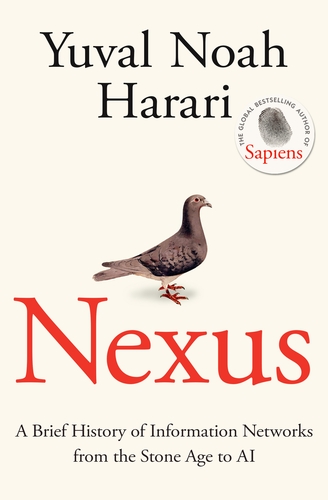
This post is part of a series. Other posts in this series are:
Defining Information: A Complex Challenge
As I mentioned in Nexus (Prologue), defining information is not straightforward – but we must start somewhere. On a day-to-day basis, we often think of information as something as basic as spoken or written words. The story of Cher Ami and the Lost Battalion provides a striking example of this, where symbols on a piece of paper – the written word – played a critical role in saving lives. But information is more than just words; even objects, or the absence of them, can carry meaning. Consider the British use of shutters to signal ships during their struggle against the Ottoman Empire – here, light and shadow became a form of communication.
One of the perspectives Harari introduced in the Prologue is the naive view of information, which believes that something qualifies as information if it is used in the pursuit of truth. This directly links information to reality, which raises another question – what do we mean by reality?
Objective vs. Intersubjective Realities
Objective realities exist independently of our beliefs, yet even the most accurate facts will always be subject to interpretation. No account of reality can ever be 100% accurate, though some are undoubtedly more accurate than others. Meanwhile, intersubjective realities – things like laws, currencies, and corporations – only exist because we collectively agree that they do. They are made real through the stories we tell about them.
This distinction matters because information plays a key role in constructing these realities. But not all information is reliable. Misinformation arises when people accidentally misrepresent reality, while disinformation is a deliberate attempt to distort it. Whether truthful or not, the fundamental function of information is to connect people and shape their understanding of the world.
The Power of Stories in Human Networks
A major shift in the evolution of information networks came with the rise of storytelling. Biological evolution allowed humans to create, believe, and pass on fictional stories, meaning networks could form even between people who had never met. This did resonate with me in the context of religion, however Harari explains that it extends beyond that – laws, financial systems, and even political ideologies exist purely because we believe in them collectively.
The intriguing aspect of stories is their role in establishing power – the argument being that those most able to express convincing stories and ideologies are those who find power. For this reason, stories can and must become detached from the truth to be a successful political strategy – skirting around the disturbing objective truths in favour of creating new intersubjective realities is almost essential in gaining a following and creating order. Social order depends not only on facts but also on the fictions and fantasies that people are willing to accept. In some cases, controlling access to truth while promoting carefully crafted fictions is essential for maintaining stability.
However, stories alone have limitations. Oral traditions rely on memory, which restricts how far they can spread. As such there was an essential transition to written documents which changed everything, as it allowed for the preservation and expansion of information networks.
Bureaucracy, Literacy, and the Challenges of Managing Information
As information networks expanded, bureaucracy became necessary to organise and store knowledge. But bureaucracy has its own problems. By structuring information into rigid systems, it risks emphasising separation rather than fostering a holistic understanding. A fragmented approach can distort reality, making it harder to grasp the bigger picture.
The shift to a central authority in literate bureaucracies also shifted power dynamics – the system became more efficient in recording information about it’s people, but the people themselves could understand the system as a whole. The point from this section of the book, is that simply increasing the amount of information does not necessarily make it easier to balance truth and order. Without mechanisms for interpretation and correction, more information can lead to confusion rather than clarity
The Role of Self-Correcting Mechanisms
Instead, what is essential to function well, are strong self-correcting mechanisms but even those must be free from error. Returning to the mythical view of information, Harari delves into the way in which divine stories moved into the age of physical documents with the creation of holy books – all of which contained the same stories to ensuring all followers can access the same information.
Interpretation of the writings in the holy books were still subjective however, and in the context of Christianity, some texts were embraced by some churches while simultaneously rejected by others. The texts shaped the direction of each church – and as history has gone on to show us, the institution that is the church emerged as an entirely new and extremely powerful one as it was this institution which could decide which interpretation was “correct”. Ultimately, the power of the Catholic Church enabled it to control the spread of books and therefore information.
But then came the next significant milestone – the introduction of the printing press which made mass production of texts possible. Many perceive that it was this breakthrough which loosened the hold which the Catholic Church had over European information networks. But with more information, also came more misinformation and it became harder to accurately dismiss fiction. The naive view which called for more information started to collapse – although more information was available, it was not necessarily accurate. I felt that this section of the book was accurately summarised below:
releasing barriers to the flow of information doesn’t necessarily lead to the discovery and spread of truth. It can just as easily lead to the spread of lies and fantasies and to the creation of toxic information spheres
– Yuval Noah Harari, Nexus, p. 101
I am sure we will revisit this idea in the context of AI later in the book.
The Scientific Revolution: A New Approach to Information
The rise of misinformation necessitated a shift toward institutions that prioritised empirical evidence and self-correction. The scientific revolution introduced new ways of organising information, where ideas had to withstand rigorous scrutiny. Unlike religious institutions that claimed authority through divine truth, scientific institutions thrived by constantly challenging and refining their own knowledge. As Harari puts it:
The most celebrated moments in the history of science are precisely those moments when accepted wisdom is overturned and new theories are born.
Yuval Noah Harari, Nexus, p. 110
Democracy vs. Totalitarianism: Information Networks at War
The final chapter of Part 1 was perhaps the most insightful for me, with my previously admitted limited knowledge of history, where Harari delves into the history of democracy and totalitarianism. My takeaways of the key differences are:
- Totalitarian systems are highly centralised, with a single authority making decisions. They lack self-correcting mechanisms and assume that the central hub is infallible.
- Democratic systems are decentralised and rely on open communication between multiple institutions. Their strength lies in their self-correcting mechanisms, such as academia, the media, and legal systems, which expose and correct biases.
Both systems involve governments that have incentives to manipulate information. Democracies counteract this by fostering transparency and institutional checks. However, democracies and dictatorships exist on a spectrum, and the positioning on the spectrum is determined by the ways in which information flows in the network and what influences political discussions. Either suppression of freedom of speech, or an unwillingness to listen can alter the discussion and therefore lead to the decline of democracy.
The Role of Mass Media and the Impact of Technology
Mass media became essential for large-scale political discussion, providing information on issues that individuals might never experience firsthand. Newspapers, radio, and television allowed for more informed public debate, with the added benefit of media outlets correcting their own mistakes to maintain credibility
As technology continued to advance, real time communication and social networks allowed people to connect simultaneously and engage in meaningful debates. This enabled large scale democracy to be possible.
However, the same technological advancements that enabled democratic discourse also strengthened totalitarian regimes. Harari uses the example of Stalin’s Soviet Union, which perfected a totalitarian information network consisting of three main branches:
- State ministries and the Red Army
- The Communist Party
- the secret police
These three overlapping surveillance mechanisms kept each other in order to allow totalitarianism to flourish. The advantage of such a network is that it enforces order and can make decisions quickly and efficiently. But if the central hub and official channels are blocked, there are no alternative channels for information to flow through. Another weakness of such a network is that its self correcting mechanisms tend to be weak, if not entirely non-existent.
Aside from this insightful deep dive into information networks in democracies vs in totalitarian systems, Harari is aiming to highlight that technology itself is neutral – it is the way it is applied that determines its impact:
- Democracies use technology to enhance transparency and discourse
- Authoritarian regimes use it to suppress dissent
That said, democracy and technology are not always an ideal match. More voices in the conversation can make reaching consensus harder. Ironically, the pressure to be democratic can sometimes make democracy more difficult to sustain.
In the long run, it was the Soviet system that proved unworkable. Harari highlights the semiconductor industry as a perfect example: in the West, open competition drove rapid innovation, while in the Soviet Union, secrecy and top-down control stifled progress. This imbalance played a key role in democracy’s ultimate victory over totalitarianism.
Reflections: Looking Ahead to AI
With that, Part 1 concludes – a journey through the evolution of information networks, from storytelling and written records to the printing press, mass media, and technological advancements that shaped democracy and totalitarianism. My key takeaway from this section is Harari’s emphasis on the neutrality of technology – how it can be wielded by those in power to serve any purpose they choose. While certain technologies may reinforce either system, their impact ultimately depends on how they are applied.
With this foundation set, I look forward to seeing how the book introduces AI into the discussion. I’m eager to explore Harari’s perspective on how this transformative technology will shape our future.
